Wednesday, April 20, 2011

The Business Intelligence Chronicles Part 22: BI and Data Governance- "show warts and all" vs. "a world through rose tinted glasses"

In an earlier post (The Business Intelligence Chronicles Part 16: Is Michael Jackson still alive? (aka Doubting Thomas/BI Skeptic) I had talked about the need to allay the fears of data skeptics - the guys who question the veracity and accuracy of information presented to them via BI tools.

Picking up that thread again I wanted to talk about the close relationship between BI and Data Governance and the two distinct forms the relationship can take.

Approach 1: "A world through rose tinted glasses"
Filter out bad data from the presentation layer and place it in an "exception report" or club it into "unknown" or "orphans" or "all others" category in the presentation layer

Approach 2" : "show warts and all"
In the presentation layer show data as is - errors and all. Visibility to errors will drive action to get the source data rectified. As a fellow blogger commented "nothing quite gets data fixed as quickly as the bad entries showing up on something the CEO sees".

The decision on what approach to take leads to an interesting dilemma for the BI manager - "Will my BI system not appear less trustworthy if it shows all the warts?" or " Will I be able to get the focus and attention required to rectify data issues if Senior Management are not exposed to them"

This leads to an excellent opportunity for Leadership to couple the BI and Data Governance initiatives with BI becoming the trigger point of a feedback loop into the Data Governance mechanism which then initiates action to identify and rectify the issue (user error, lack of validation in a data input system, problem with one or more interface etc.). And voila! if all works well the next run of the report will show correct information.

Obviously all this holds true if senior management values the BI they receive and realize the importance of its accuracy. If that holds true than the quality of data can improve drastically within a few cycles. Nothing inspires action more in a corporate environment than a missive from the CXO.

Mr. Lely, I desire you would use all your skill to paint my picture truly like me, and not flatter me at all; but remark all these roughnesses, pimples, warts, and everything as you see me, otherwise I will never pay a farthing for it.

-Oliver Cromwell

Thursday, March 24, 2011

The Business Intelligence Chronicles Part 21: Data warehousing Title Fight, get your bets in...

After BI now the turn of Data warehousing.

Per Gartner 2011 will be the year when data warehousing reaches what could well be its most-significant inflection point since its inception, the new data warehouse will introduce new scope for flexibility in adding new information types and change detection.

Gartner adds, in 2011, data warehouse platforms will evolve from an information store supporting traditional business intelligence (BI) platforms to a broader analytics infrastructure supporting operational analytics, corporate performance management and other new applications and uses, such as operational BI and performance management.
 
Magic Quadrant for Data Warehouse DBMS

Key Highlights:
 
 
1. Organizations are adding workloads with online transaction processing (OLTP) access, and data loading has moved to intra-day — approaching continuous — loading in many cases.

2. While cost is driving alternative architectures, performance optimization is driving multitiered data architectures, including a strong interest in in-memory data mart deployments. At the high end, data warehousing is now mission-critical.

3. data warehouse "ideal" is changing and will give way to new kind of warehouse that addresses more extreme types of information assets. As a result, data warehouse DBMS vendors must begin to address numerous, new information asset formats, or be relegated to supporting roles in the future.

4. real opportunity for data integration tools vendors to challenge the database management system (DBMS) vendors as the primary data management architecture, and the DBMS vendors should not underestimate this potential competition.

5. The market is shifting from storage and access to delivery and comprehension, and that means context as depicted in metadata will become paramount. Another contender for the crown of information provider is business process platforms, which deliver business process management. Although late to the game and less mature than either DBMS or data integration, these solutions assist in managing the business context of information management.

6. By 2013, Gartner predicts that data warehouse DBMS vendors will combine their offerings to become something more like an information management platform. The DBMS will become, above all else, an execution platform. It will support and perform data management and integration tasks as well as for query and analysis execution.

7. "Many traditional data warehouse DBMS vendors already offer both the DBMS and execution platforms — but the independents may surprise the mega vendors. By all indications, acquisitions as well as research and development will set the stage and the deciding factors for the big winners and losers when the 'title fight' begins."

Thursday, February 17, 2011

After Jeopardy what's next for IBM's Watson? Bring about a Healthcare Revolution as "Dr. Watson"?

Not as far-fetched as it sounds. After pummeling previous Jeopardy Super Stars Ken Jennings and Brad Rutter into submission over the last few nights on Jeopardy (with Ken signing off his final answer with " “I, for one, welcome our new computer overlords”), IBM's Watson may take on a new Avatar as a Physician's Assistant (from MobiHealthNews)::

“For IBM, the future will happen very quickly, company executives” told the Times. “[Today] it plans to announce that it will collaborate with Columbia University and the University of Maryland to create a physician’s assistant service that will allow doctors to query a cybernetic assistant. The company also plans to work with Nuance Communications Inc. to add voice recognition to the physician’s assistant, possibly making the service available in as little as 18 months.”
Nuance, of course, offers the very popular Dragon voice recognition software for healthcare providers and others. Imagining a voice-enabled “physician assistant service” that taps into Watson and available as a smartphone app is not at all difficult. A desktop version of the service would be substantially less useful.
“I have been in medical education for 40 years and we’re still a very memory-based curriculum,” Dr. Herbert Chase, a professor of clinical medicine at Columbia University who is working with IBM on the physician’s assistant told the New York Times. “The power of Watson-like tools will cause us to reconsider what it is we want students to do.”
For those who are not Jeopardy Buffs, Watson is a new super computer from IBM that prove itself more than capable of besting and replacing today’s top Jeopardy! players. In a television spectacle reminiscent of the super computer Deep Blue’s win over chess world champion Gary Kasparov in 1997, a room-sized computer developed by IBM managed to beat out a pair of Jeopardy! all-stars over the course of a three night game this week. Watson, ended the run with $77,147 compared to Ken Jennings’ $24,000 and Brad Rutter’s $21,600.

The match included a medical related question — no, a diagnosis question really: “You just need a nap. You don’t have this sleep disorder that can make sufferers nod off while standing up.” Watson beat out the humans with the answer: “What is narcolepsy?” Maybe you don’t need an M.D. for that one, but still the computer got there first.

Wednesday, February 16, 2011

The Business Intelligence Chronicles Part 20: The Battlelines are drawn: Traditional Enterprise BI Platforms vs. Data Discovery Platforms

Gartner's recently released Magic Quadrant for Business Intelligence Platforms highlights a trend which all BI practitioners have observed over the past few years : the divide between Traditional enterprise BI platforms and Data Discovery platforms and the resultant confusion amongst decision makers about which one to opt for.

Each one has its own strengths and weaknesses as Gartner has very nicely captured in this comparison:


Gartner goes on to say 
"The chasm between these segments has deepened because business users find the benefits of using data discovery tools so compelling that they make this choice despite the risk of creating fragmented silos of data, definitions and tools. This has accentuated the need for IT organizations to back away from a single-minded pursuit of standardization on one vendor to a more pragmatic portfolio approach."
Gartner's magic quadrant as it stands today still shows the Traditional enterprise BI Platforms (IBM, Oracle, Microsoft, Microstrategy etc.) in the Leaders quadrant while the Data Discovery Platforms with the exception of Qliktech are in the Challengers (Tableau, Tibco) or in the Niche Players category (Jaspersoft et al)


However, that will be in a state of flux as Traditional BI vendors  add Data Discovery to their portfolio (Microsoft with PowerPivot, SAP with SAP BusinessObjects Explorer, IBM with IBM Cognos Express and Information Builders with WebFocus Visual Discovery ) as they see BI spend dollars slipping to Data Discovery vendors with their ability to model, navigate and visualize data.

Meanwhile, Data discovery tool vendors (like Qliktech) are implementing capabilities to improve their enterprise readiness.
Gartner views "capabilities for integrating departmental and enterprise data models" as one of 10 important capabilities for Quadrant placement.
 
Surprisingly there is no player in the "Visionary" category. So it seems that we are stuck with these two alternate approaches (Traditional Platform and Data Discovery) and their hybrids for the near term horizon. I was hoping that time was ripe for a player to emerge with a Google/Amazon/Facebook mash up kind of approach to BI of the kind I described in an earlier post: The Business Intelligence Chronicles Part 8: Star Trek returns....  :
 
I would focus on the direction it should be headed. And the single word answer to that is "simplification". The current and evolving paradigm of user-technology interface can be defined by a single word : "Google". Never before has the "Keep it Simple, Stupid" paradigm been so successful.
And that is the direction which BI needs to head to also.
A simple, single line search box which delivers context specific search and reporting capabilities. A sales rep types in the name of a city and links to sales report(s) for all customers in that city appear.
Also an Amazon.com kind of feature -" People who viewed this report also viewed...". Gives the user a quick and easy feel of what else s/he should be looking for. Building in "crowd intellect" into the reporting capabilities.
And what about a feature which allows a user to know who else is looking at a particular report in real-time or has viewed the report earlier (a viewing history). Combine this with interactive chat or communication capabilities and you have transformed a "report" into a "collaborative interaction".
Did I miss Geospatial analytics and GPS, how about integrating them with BI capabilities. A manager viewing a report, identifies issues with a particular customer, is able to identify the sales rep closest to that location based on the GPS capabilities of the handheld the rep is carrying and asks him/her to visit the customer.
BI has already ventured beyond Reporting & Analytics to Actionable Intelligence. Now it needs to venture even further to "Intelligent Actions". The gap,distance between the availability of intelligence and resultant action needs to be reduced by incorporating other emerging technologies into the classical BI Framework
A (non) player which I have been bullish about has been Google. I wrote in 2009 ( The Business Intelligence Chronicles Part 12 :BI - "Head in the clouds but feet firmly planted on the ground") :
 

Staying on Google, I think that it may not be long before they enter the BI arena. They know how to manage huge volumes of data, run server farms and manage an analytics front end , currently primarily used to present information related to blogs/website statistics but can easily be modified as a front-end for business related information.
They have confounded me by not showing their hand yet.

Maybe IBM may have something up its sleeve with "Watson". They'll have to put it to work after it is done clobbering Ken and Brad on Jeopardy. BI would be a good space to put is skills to use. I had speculated :
There was a time when we had BI Tools, then vendors started branding them as Applications. These days several vendors are offering BI Appliances. Following the trend to it's logical conclusion, I would think that very soon we may see BI Machines or BI Engines.

Is "Watson" going to be the BI Machine/BI Engine of the future? "Elementary, My dear Watson",  I hear as I stroke my Sherlockian chin.


Sunday, January 9, 2011

Smartphones emerge in new health care role.

When the Rochester Democrat and Chronicle approached me to contribute an article on emerging healthcare trends in their "Speaking Out" edit page today focused on Health Care, I decided to write about something which I had alluded to in an earlier blogpost on this blog: Good bye Doctor! Hello Smart Phone!

Here's the article as it appeared in the paper today:


Smartphones emerge in new health care role.

Deepak Seth • Guest essayist • January 9, 2011


Move out of the way, Doctor! Just when you thought rising liability insurance costs and declining Medicare and Medicaid reimbursements were your biggest worries, you have a new one emerging on the horizon — the evolution of the smartphone into a primary care physician.


The scenario is not as farfetched as it sounds. A recent survey by Pew on the adoption rate of mobile health ("mHealth") applications found that a full 9 percent of American mobile phone users said they have mobile health apps on their phones that enable them to "track" or "manage" their health. Other studies predict that more than a third of 1.4 billion smartphone users in 2015 will be running some kind of mobile health care application.

Smartphone and other mobile health care apps include those for diabetes and other chronic diseases' management, and hospital-based Radio Frequency Identification.

Smartphone health care apps seem set to emerge as a differentiator in the increasingly competitive health care marketplace as health care players such as insurance and pharmaceutical companies queue to launch their own apps or co-branded apps as promotional tools or potential revenue streams.

Joining the bandwagon are telecom and technology companies that will attempt to get into the health care sector now that they have a foot in the door through their control of the newly emerging health care delivery platform — the smartphone. Opportunities may exist for health care players to work out collaborative agreements with telecom players to leverage each other's strengths.

Doctor, no reason, though, to lose heart yet. Nearly half of smartphone and mHealth applications are designed for health care providers aiming at improving their effectiveness and efficiency in areas such as continued medical education programs, health care management and remote monitoring applications.

Seth, of Brighton, is an information technology and business intelligence expert.

Tuesday, January 4, 2011

Frugal Innovation/Jugaad Edition # 3

From the Jan-Feb edition of Harvard Business Review(New Business Models in Emerging Markets) as reported in the Wall Street Journal:

Chamak : A Laundry Service that is designed to serve those fed up with doing laundry themselves. Their current choices: A cheap but potentially unhygienic dhobi (washerman) or an unaffordable fancy launderette or dry cleaner. Both take several days.

From an economic standpoint, setting up a chain of self-service laundries was deemed too expensive to make a decent return.


Their solution: Portable, seven-foot-square kiosks with a front-loading washer and dryer, with an independent water supply, placed where there is most foot traffic. Customers drop off their clothes to be washed, dried and ironed in 24 hours.The company can charge 50 rupees (slightly less than $1) for a kilogram of clothing. And they'll SMS you when they are done! The service now has 5,000 customers patronizing 20 booths in Mumbai, Bangalore and Mysore.

ChotuKool  from Godrej & Boyce:  this little refrigerator, which holds just a few products and can run on a battery during power cuts

.


Friday, December 31, 2010

Happy New Year 2011!

A message I received for the New Year which nicely captures all that I wish for you & your family ...


H appiness depends upon your outlook on life.

A ttitude is just as important as ability.

P assion, find yours this year!

P ositive thoughts make everything easier.

Y ou are unique, with special gifts, use them.


N ew beginnings with a new year.

E nthusiasm a true secret of success.

W ishes may they turn into goals.


Y ears go by to quickly, enjoy them.

E nergy may you have lots of it.

A ppreciation of life, don't take it for granted.

R elax take the time to relax in this coming year.


I wish you and yours a very Happy,Healthy,Safe and Prosperous 2011. Keep visiting and sharing feedback. Thanks for your support.

Friday, December 17, 2010

Good bye Doctor! Hello Smart Phone!

Good bye Doctor! Hello Smart Phone!: The emergence of the Smart Phone as a Healthcare Delivery Platform

Move out of the way! Doctor. Just when you thought rising liability insurance costs and declining Medicare and Medicaid reimbursements were your biggest worries, you have a new one emerging on the horizon - the evolution of the Smartphone into a Primary Care Physician.

The scenario is not as farfetched as it sounds. A recent survey by Pew on the adoption rate of mobile health ("mHealth") apps found that a full 9 percent of American mobile phone users said they have a mobile health app on their phone that enables them to "track" or "manage" their health. Another recent study compiled by research2guidance, predicts that more than a third of 1.4 billion smartphone users in 2015 will be running some kind of mobile healthcare application.

Over a six month period from Feb 2010 to Sep 2010 each of the Smartphone Applications Platform: Apple App Store, Google Android and Blackberry App World have shown robust double digit growths in the number of Health Apps available. The composite growth across all platforms was 78% with Apple growing 66.6% from 4276 Health apps to 7136; Google showing a growth of 156.6% from 505 to 1296; and Blackberry showing a phenomenal growth of 141.4% from 140 to 338.

Smartphone and other mobile healthcare applications include those for diabetes and other chronic diseases' management, hospital based RFID and the use of technologies such as Bluetooth and ZigBee for health and fitness monitoring. A number of SMS messaging and Health 2.0 based medical applications are also emerging.

Smartphone Healthcare apps seem set to emerge as a differentiator in the increasingly crowded and competitive healthcare insurance marketplace (USP: "My smartphone apps to track your health are better than the competition" ) as healthcare players (Insurance companies, Pharmaceutical Companies, Device companies, Providers etc) queue to launch their own apps or co-branded apps as promotional tools or potential revenue streams.

Joining the bandwagon could be telecom or technology companies who will attempt to backward integrate into the healthcare sector now that they have a foot in the door through their control of the newly emerging healthcare delivery platform - the smartphone. AT&T recently launched AT&T For Health. The objectives for this group sound almost like that of a Healthcare plan: “combine mobility technologies, devices, connectivity, and applications to help drive down medical costs and deliver improved patient outcomes." These services aim to help healthcare providers and patients manage disease, stay adherence, age in place, manage weight loss, and monitor wellness.

As telecom companies step in the same "Health and Wellness" space Healthcare insurance companies are trying to expand into, the battle for the "patient" is likely to heat up. The telecom companies may have a technology advantage but are likely to be limited by their lack of a "patient base". Opportunities may exist for Healthcare players to work out collaborative agreements with telecom players to leverage each others strengths.

Doctor, no reason though to lose heart yet, nearly half of Smartphone or mHealth applications are designed for Healthcare Providers aiming at improving their effectiveness and efficiency in areas like continued medical education programs, healthcare management and remote monitoring applications.And there's another side to the story too. A recent Harvard Health publication indicated that as phones and their apps become smarter and smarter, more clinicians are incorporating them into their practices. They say, in a few years, filling a prescription may be just as likely to involve a session in the apps store as a trip to the pharmacy.


Pssst…let me check my Smartphone mHealth app to see how my Blood Pressure and Heart rate tracked as I penned this piece.

Thursday, December 9, 2010

Cornflakes? We've got an app for that too!!

This week major food brand Kellogg’s entered the world of smartphone apps with its first offering — myPlan, the Special K Challenge application for iPhone and Android platforms. The app enables users to create a two-week diet plan, update daily and weekly menus, track progress, find recipes, create shopping lists and receive motivational tips.

More details at : Interview: Kellogg on new myPlan diet app

Thursday, December 2, 2010

Frugal Innovation/Jugaad Example # 2

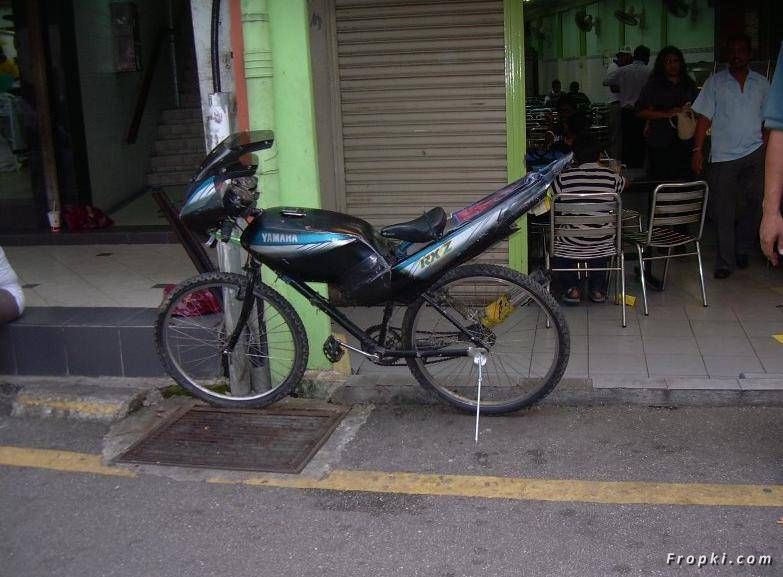
What if you cannot afford a motorbike?


You dress up your cycle as one!!

Jugaad at work (Frugal Innovation/Jugaad Example # 1).

Tuesday, November 30, 2010

Gartner's Top Predictions for IT Organizations and Users for 2011 and Beyond

Gartner Reveals Top Predictions for IT Organizations and Users for 2011 and Beyond

  1. By 2015, a G20 nation's critical infrastructure will be disrupted and damaged by online sabotage.
  2. By 2015, new revenue generated each year by IT will determine the annual compensation of most new Global 2000 CIOs.
  3. By 2015, information-smart businesses will increase recognized IT spending per head by 60 percent.
  4. By 2015, tools and automation will eliminate 25 percent of labor hours associated with IT services.
  5. By 2015, 20 percent of non-IT Global 500 companies will be cloud service providers.
  6. By 2014, 90 percent of organizations will support corporate applications on personal devices.
  7. By 2013, 80 percent of businesses will support a workforce using tablets.
  8. By 2015, 10 percent of your online "friends" will be nonhuman.

These were selected from more than 100 of the strongest Gartner predictions across all research areas  submitted for consideration this year. This year's selection process included evaluating several criteria that define a top prediction. The issues examined included relevance, impact and audience appeal.

Additional details are in the Gartner report "Gartner's Top Predictions for IT Organizations and Users, 2011 and Beyond: IT's Growing Transparency"  (you will need to register at the Gartner site)

Do you agree with these? Do you have some predictions of your own which you think need to be added to the list? Let's do some crystal ball gazing of our own........

Tuesday, November 23, 2010

Cytotron: Exciting New Development

One of the most popular posts on my blog has been Cytotron : A cure for Arthritis ?? . Many have wondered when would this pathbreaking technology become mainstream and be available in the US.

Now there's some exciting news on that front:  "The CYTOTRON  is a Rotational Field Quantum Magnetic Resonance device to treat cancer and improve drug targeting and delivery... Shréis Scalene Sciences LLC, an Organization de Scalene member company, today announced that it has been awarded a cash grant of about a quarter million USD, under the U.S. Government’s Qualifying Therapeutic Discovery Project (“QTDP”) program, for 2010 "

The grant has been awarded to Shréis Scalene Sciences LLC (USA) to use "the CYTOTRON, as a stand-alone device utilizing Rotational Field Quantum Magnetic Resonance (RFQMR) to treat cancer and improve drug targeting and delivery through nano-permeabilization”.

The device uses Rotational Field Quantum Nuclear Magnetic Resonance (RFQMR) to deliver highly complex quantum (packet switched) beams in radiofrequency (RF) bands and harmonics ranging up to 300MHz in the presence of high instantaneous magnetic fields between 1mT to 6T, with specialized near field parabolic antennae.

Despite the wide array of prevailing therapies covering the entire range of the EM spectrum - from minimally invasive (thermal) RF ablation to complex ionizing radiation/prohibitive proton beam therapies - there is no stand alone, whole body, multi-organ suitable therapeutic device on the market today.

The CYTOTRON uniquely combines RF with instantaneous NMR, to safely yet effectively perform in vivo multi organ tissue engineering, with minimal/no collateral damage. A clinical trial was also registered with clinicaltrials.gov (NCT01220830) using the CYTOTRON to treat Multiple Sclerosis. The trial is ongoing at the S-CARD campus in Bangalore.

An international patent application filed by the inventor Dr. Rajah Vijay Kumar, for the use of a Cytotron application called Focused Resonance Nano-permeabilization (FORN) has been recently published by the World Intellectual Property Organization (WIPO). Evidence exists that FORN can be combined with chemotherapy, using it as a "drug focusing and delivery tool" to non-invasively target intractable, impervious lesions, helping to reduce systemic toxicities and improve therapeutic windows.

Thomas Jefferson Hospital in Philadelphia (PA) has issued a letter of intent to conduct a clinical trial using the Cytotron in brain cancer. Early interest was received from the Center for Prostate Disease Research-WRAMC for the use of the Cytotron to treat prostate cancer. SSS executives are confident that the award of the prestigious QTDP grant will open up more doors to make the device and the treatment available in multiple medical institutions nationwide.

Read more details at : Shréis Scalene awarded Federal QTDP grant to advance use of the CYTOTRON

Future of the Web: A web visionary speaks

Came across this interesting and informative presentation ("Ten Questions Internet Execs should ask and answer")  by Mary Meeker, Morgan Stanley M.D.; delivered at the Web 2.0 Summit at San Francisco on Nov 16, 2010.


Meeker is head of the firm's global technology research unit (Latest Update 11/30: A Onetime 'Queen of the Net' Heads to Silicon Valley : Meeker moves to Silicon Valley venture-capital firm Kleiner Perkins Caufield & Byers as a partner) . She has been called "Queen of the Net" by Barron's and was named "one of the ten smartest people in tech" by "Fortune" magazine in 2010. Her prognostications about the state and future of the Internet are much awaited and respected. Meeker helps set the tech agenda in her annual state of the Internet address at the Web 2.0 Summit in San Francisco.

The 10 questions Meeker asks and answers are:
  1. Globality
    Do you know which players in which countries do what you do better (or at least differently) than you do? Do you study / implement it?
  2. Mobile
    Ramping faster than any ‘new new thing’ – is your business leading or lagging?
  3. Social Ecosystems
    Would you rather be Apple, Google or…Facebook?
    Will their future directions help / hurt your business?
  4. Advertising
    Ripe for innovation – will your business benefit?
  5. Commerce
    ’Wal-Mart in your pocket’…location-based services…group buying power…flash sales… deep discounts…transparent pricing…real-time alerts / ratings…virtual goods...immediate gratification… Products must be fast + easy + fun.
    Have you ever seen ‘constant improvement’ in products like we are seeing now? Is your business keeping pace?
    Do humans want everything to be like a game?
  6. Media
    What does the extraordinary ramp in on-demand video usage mean for your business?
  7. Internet Company Leadership Evolution
    Shocking changes over just 6 years… are you prepared for next half decade of change?
  8. Steve Jobs
    What’s his ‘secret sauce?’ Does your company have it?
  9. Ferocious Pace of Change - What’s Next in Tech?
    When do consumers / enterprises & incumbents / attackers need you?
  10. Closing Thoughts –
    Large companies do not typically support rapid growth rates of the magnitude that follow… will these trends continue? 
Food for thought!...not exactly what you needed as you visualize the food laden platters for Thanksgiving.


Happy Thanksgiving!

Friday, November 19, 2010

The Business Intelligence Chronicles Part 19: SAS vs. Cognos or is it SAS & Cognos??

Comparison of user feedback on the two tools for various parameters (compiled from various sources)
Companies with big data crunching groups often end up with a conundrum related to tool selection esp. when making a choice between SAS and Cognos 8. My thoughts on the issue: 
  • Both can coexist. Rather than it becoming a "SAS vs. Cognos" scenario it can be "SAS and Cognos".
(A scenario which exists at some players: Generally, Cognos used as a data presentation layer that includes descriptive statistics and OLAP. SAS having a substantially more powerful ETL (Extract, Transform, Load) capability, used for data prep processes. Finally, SAS handles the inferential statistics and data mining, including predictive and optimization modeling.

To summarize, SAS used to integrate and perform ETL  on data, Cognos to present the data, then SAS to analytically crunch the data.

The analytical results may then be reported back through Cognos. This whole process can be made to feel seamless. 

Potentially some of the same synergy can be realized by a Cognos-SPSS combination.) 
  • Release of Cognos 10 and integration of Cognos-SPSS makes the comparison more difficult as SPSS adds the predictive/statistical analyses capabilities which Cognos was weaker in. On other hand the SAS - Enterprise Guide provides a very analytical user friendly front-end
How have you dealt with your Predictive Analytics vs. Descriptive Analytics dilemma ? Peaceful co-existence or daggers drawn ? 

Friday, November 12, 2010

Ancient Indian Mathematics ; and the World Wide Web running out of IP addresses

Modern technologists have shown a remarkable lack of vision when envisaging the potential scope and spread of their innovations especially when dealing with numbers. Y2K, D10K etc, were manifestations of this malaise and now we come across the latest - the Internet may be in a danger of shut down as it runs out of IP addresses ("It sounds far-fetched, but a crisis with the potential to close off the Internet is imminent.").


How will my refrigerator talk to my toaster then? A big reason for running out of IP addresses is that almost every household device is Internet compatible now and has a unique IP address associated with it.


Juxtapose this against the logic of mathematicians of ancient India who had names for numbers as large as 10 to the power 17, yes 17


10 power 0      Eka
10 power 1      Dashah 
10 power 2      Shata
10 power 3      Sahasra
10 power 4      Ayuta
10 power 5      Laksha
10 power 6      Prayuta
10 power 7      Koti
10 power 8      Arbuda
10 power 9      Abja
10 power 10    Kharva
10 power 11    Nikharva
10 power 12    Mahapadma
10 power 13    Shankha
10 power 14    Jaladhi
10 power 15    Antya
10 power 16    Madhya
10 power 17    ParArdha.


Why? as early as 1st Century B.C.E. (perhaps even earlier) would they be wrapping their arms around such huge numbers baffles the imagination. 


The reasons were often mundane but can be well appreciated - like a prayer from Krishna Yajur Veda (4th Khanda, 4th Prashna)- a prayer and a wish for the wealth of cows to abound in large numbers, like millions and millions.  The counting of cows here goes by  hundreds, thousands, and thousands and millions of hundreds.


Now one can get an idea about the roots of a sense of exactitude even when things are nebulous - no , it's not God give me lots of cows but God give me a ParArdha cows!! ("..........parArdhashcemAme agna ishTakA dhenavassantu." - sanskrit)


So ye Gods of the Internet (aka "American Registry for Internet Numbers") move soon from the antiquated IP address of the type 74.125.227.19 (system offering roughly 4.3 billion possible IP addresses) to the the ones which look like fe80:43e3:9095:02e5:0216:cbff:feb2:7474 (offering 340,282,366,920,938,000,000,000,000,000,000,000,000 addresses......that should make the "cow counters" happy). In techspeak move from IPv4 to IPv6.


Now let me go back to counting sheep....or is it cows..sheep...cows...sheep.....zzzzz

Useful Resource: IPv4 / IPv6: The Bottom Line

The Business Intelligence Chronicles Part 18 : Lost (or Found?) in a Cloud


The Business Intelligence Chronicles in a Word Cloud

The Business Intelligence Chronicles in a Phrase Net

As I played with the new data visualization capabilities from IBM Research Labs (Many Eyes), I thought it would be nice to see how previous parts of The Business Intelligence Chronicles would appear in a Word Cloud and Phrase Net. The results are above.

Many Eyes are Data visualization tools from IBM, currently described as an "experiment" from IBM Research and IBM Cognos software group. Site allows users to upload data and then produce graphic representations for others to view and comment upon.

Word Cloud Generator was first published by Jonathan Feinberg on wordle.net. It was designed to give pleasure, and not to provide reliable analytic insight. That said, many people have found unexpected uses for it, from presenting the "gist" of a text to displaying personal identity. Word Cloud Generator draws each word at a size proportional to its frequency.

Thursday, September 16, 2010

Frugal Innovation/Jugaad Example # 1

Jugaad or Frugal Innovation, a way of life in India is the latest corporate buzzword (HBR, WSJ, Businesweek, The Economic Times) in the US.

Doing more for less is the new mantra for success in a stagnant recessionary economy and nowhere is the spirit of doing more for less better epitomized than by "jugaad", called by some as "art of creative improvisation", using things in a way they were not originally intended to achieve an objective.

Here's how Wikipedia defines it : ""Jugaad" is also a colloquial Hindi word that can mean an innovative fix, sometimes pejoratively used for solutions that bend rules, or a resource that can be used as such or a person who can solve a vexatious issue. It is used as much for enterprising street mechanics as for political fixers. In essence, it is a tribute to native genius, and lateral thinking."

I would like to share on my blog some of the examples of "jugaad" I come across. Please share your experiences too.

How's this for keeping your footwear safe oustide a temple or on the beach:


Updating this post to add a link to another interesting article on Jugaad from the WSJ : Jugaad on the Road to Success

Wednesday, September 8, 2010

How can your Boss kill you?

"Bosses matter,” says Stanford management professor Bob Sutton in “Why good bosses tune in to their people.” Among other things, bad ones can kill you: a study found that their subordinates had up to 40 percent more heart attacks than people who had good bosses."

Sunday, September 5, 2010

Monday, August 16, 2010

Evolution of the Apple "iDevices"

Something funny I came across. Enjoy!!
And I don't mean "funny" in a disparaging sense....nobody blends "fun" and "innovation" as well as Steve Jobs.....


2016 iHome??

US-India relationship: "one of the defining partnerships of the 21st century"

Happy Independence Day (Aug 15) to all my Indian friends. Thought I would share President Obama's message on this occasion.

Statement by the President Obama on India's Independence Day


On behalf of my administration and the American people, I wish to congratulate all who will celebrate the 63rd anniversary of India’s independence. Indians around the world can not only look back on their history with pride, but can also look ahead to a future filled with hope and further progress. Ever since August 15, 1947, India’s non-violent struggle for freedom, its rejection of terrorism and extremism, and its belief in democracy, tolerance, and the rule of law have been an inspiration and beacon of hope for people around the world. India’s example has had a profound effect on many countries, including the United States. Leaders of our civil rights movement, including Dr. Martin Luther King, Jr., spoke about the debt they owed to Mahatma Gandhi. Ties between our two peoples have never been stronger. The over two million members of the Indian American community are living examples of the bonds that bind our nations together and their accomplishments have become well-known and admired in both countries. The strategic partnership between our countries will continue to grow, and I am looking forward to my November visit to India. Our goal is to make this one of the defining partnerships of the 21st century. Once again, congratulations and best wishes for a happy and safe Independence Day.

Tuesday, July 6, 2010

We are proud to be new Americans

We are proud to be new Americans


Deepak Seth • Guest essayist • Rochester Democrat and Chronicle • July 4, 2010

On July 4, 2007, in a piece published in this newspaper, I had written "On Fourth of July I think of Fireworks, Festivities, Family, Food, Fun and much more but most importantly FREEDOM."

Three years down the line that still holds true, as it will for even the next 300-plus years, the cherished ideals of Life, Liberty and Pursuit of Happiness on which the Founding Fathers laid the keel of this great nation continuing to serve as shining beacons all over the globe. What has changed for me and my family though since I wrote that piece is that this year we join the festivities as "new" Americans.

On May 17, 2010, we joined 70-plus individuals from 35-plus countries as newly minted United States citizens in taking the oath of naturalization in a ceremony at RIT. The ceremony was solemn and joyous and the presiding judge reminded us of some of the illustrious footsteps we were now stepping into: Scientist Albert Einstein, Secretaries of State Madeline Albright and Henry Kissinger, songwriter Irving Berlin ("God Bless America"), Astronaut Kalpana Chawla etc. The list is long and awe-inspiring, and a reminder that immigrants have been the lifeblood of this great nation.

My thoughts flashed back to the Founding Fathers, who with their sagacity and foresight created a strong foundation in forming the U.S. Constitution, which has withstood the tests of time; and the subsequent leadership at all levels of government which has more often than not consistently placed the nation's interest ahead of their own personal interests to the extent we now take that for granted. Sadly, that is not the situation in many other countries around the globe.

I think of our men and women in uniform who are spending this day in distant lands far away from home. The Red and Blue of the Star-Spangled Banner I am sure shines as bright under the desert sun of Iraq and Afghanistan as it does swaying in the breeze off Lake Ontario, a constant reminder that freedoms earned have to be defended often at the cost of one's own blood.

I salute these heroes and our hometown heroes, but more importantly I salute the PEOPLE of our great nation. The people are what have made the nation great; the voice of the people reflected in our democratic institutions have enabled us to right the wrongs of history and move ahead even as other nations continue to stay mired in the quicksand of the past.

Deepak Seth is a former community member of the Editorial Board.

Friday, January 29, 2010

Bills organization spans generations

Bills organization spans generations
Published in The Rochester Democrat and Chronicle, Jan 28,2010


Owner: 90-plus years old
GM: 70-plus years old
Coach: 50-plus years old
Players: 20 to 30 years old

If ever there was a team spanning generations it is the Buffalo Bills. "Back in my times" takes a whole new meaning with so many generations present. Let's hope this intergenerational dynamic generates some action on the field rather than the usual intergenerational issues of trying to figure out what the other generation means — I cannot make sense out of my kids' texting.

—DEEPAK SETH
BRIGHTON

Friday, November 20, 2009

The Business Intelligence Chronicles Part 17: BI gets "Sixth Sense"

Well, some of you may say isn't it too late in the day for BI to be getting "Sixth Sense". Isn't BI supposed to be a moniker for organizational sixth sense capabilities?

My answer: To all ye tech geeks who walk the hallways with your noses buried in your iPhones and Droids, here’s a look at some technology of the future which will really blow your mind away. Pranav Mistry of MIT has morphed the cellphone, projector, camera and a few other devices to create something that looks like it’s pulled from the pages of a science fiction book:


Sixth Sense (presented by Patti Maes,Professor,MIT)

Sixth Sense (presented by Pranav Mistry, PhD Student, MIT)

What does it mean for BI: interactive reports projected on the walls of elevators as people continue their discussions after heading out from meeting rooms? Reports dynamically structured basis who is participating in the discussions?

What are your Sixth Sense ideas?

Realpolitik vs. Moral Principle

Realpolitik vs. Moral Principle: A classical dilemma manifested often a time in the way nations react to each other and to issues confronting them. US today confronts this dilemma as it warily treads towards a new relationship with a economically and militarily resurgent China eager to establish a new World Order.

India's dealings with China may offer some lessons as I expounded in a letter to the editor of the Wall Street Journal in response to an earlier published Editorial:

LETTERS NOVEMBER 14, 2009

India Stands Up to China on Tibet

Your editorial "Dalai Lama Lesson" (Oct. 30) points out the differences in approaches in dealing with the Chinese Dragon's bellicosity by India and the U.S., but fails to mention that China is the U.S.'s largest creditor. The Indian administration has no such constraints.

India has not budged on its principled stand regarding hospitality for the Dalai Lama and Tibetan refugees over the past five decades even as China has grown in military and financial clout. One wonders how the U.S. would have reacted to Chinese pressures if the Dalai Lama would have been a refugee here. Realpolitik and commercial pressures might have prevailed over moral principle.

The bitter experience of the 1962 India-China war has led to a wary "better safe than sorry" approach while dealing with China, and the shared belief among most Indian politicians about the need to call a bully's bluff every time a threat is made.

Regardless of the party in power in Washington, China knows that in the case of a face off it will be the U.S. that will blink first. Think of President George W. Bush and the spy plane fiasco or President Obama and the Dalai Lama's visit.

Deepak Seth
Rochester, N.Y.

Search Google

Google